
Find Yuba County Unclaimed Funds
Yuba County unclaimed money is primarily held by the California State Controller. The county publishes notices of unclaimed property as required by state law but directs residents to the state system for most searches and claims. Banks, employers, insurance companies, and other businesses in Yuba County report dormant accounts and uncashed checks to the state after legal dormancy periods expire. This includes forgotten bank accounts, old paychecks, insurance proceeds, utility deposits, and more. The state holds billions of dollars in unclaimed property and reunites it with owners at no cost. You can search the state database for free and file claims without paying any fees. The process is designed to make it easy for rightful owners to recover their money.
Yuba County Quick Facts
California State Controller Database
The California State Controller holds unclaimed property for Yuba County residents. Over $11 billion in total unclaimed property sits with the state. Yuba County accounts for a portion of this total. When a bank, employer, or other business cannot locate an account owner after the dormancy period, they report the property to the state. The state holds it indefinitely until the rightful owner files a claim.
Search the database at the state controller's property search portal. The search is free and available 24 hours a day. Type your name to see if the state is holding property for you. The results show the property type, the business that reported it, and an approximate value.
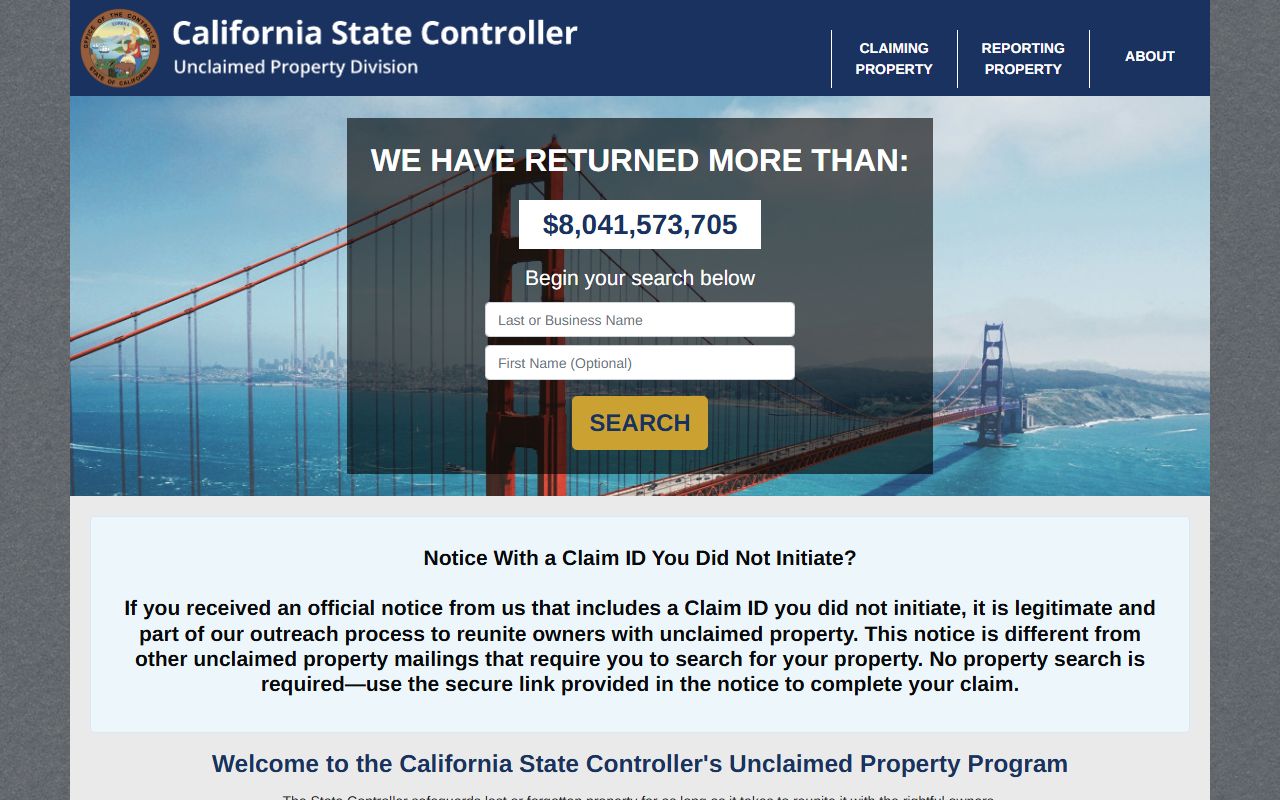
Try different name variations. Use your full legal name and any nicknames. Search maiden names if you married or divorced. Include any business names if you owned a company. Try addresses where you lived in Yuba County. Many people find property they forgot about by searching multiple ways.
When you find property that belongs to you, click on it to start the claim process. The website tells you if you can file online or need to submit a paper claim. Online claims are faster. The system generates a claim form with the property information. You fill in your current contact details and submit it electronically.
Simple claims under $1,000 often require just basic identification. The state verifies your identity and processes the claim. Larger claims over $1,000 must be notarized. You sign the claim form in front of a notary public who verifies your identity and witnesses your signature. All securities claims require notarization no matter the value. Safe deposit box claims have additional requirements because contents may include valuables beyond cash.
How Property Becomes Unclaimed
Property becomes unclaimed when the owner cannot be located after a period of inactivity. Each type of property has a specific dormancy period set by California law. When that period passes with no owner contact, the holder must report the property to the state.
Bank accounts are the most common example. You open an account and then stop using it. Three years pass with no deposits, withdrawals, or contact with the bank. The bank tries to reach you by mail. Their letters come back as undeliverable. The bank reports the account to the state controller. The state holds the money until you claim it.
Paychecks go unclaimed frequently. Someone works a job and moves on. The employer issues a final paycheck. The check gets mailed to an old address and cannot be delivered. After one year, the employer must send the uncashed wages to the state. This happens often in Yuba County where seasonal work and temporary jobs are common.
Utility deposits create unclaimed property when people move. You close an electric, gas, or water account. The utility owes you a deposit refund. They mail a check to the address on file. You already moved to a new place. The check cannot be delivered. One year later, the utility turns the deposit over to the state.
Code of Civil Procedure section 1513 sets these dormancy periods:
- Bank accounts: three years of no activity
- Wages and paychecks: one year from payment date
- Money orders: seven years from issuance
- Traveler's checks: fifteen years from issuance
- Utility deposits: one year after account closure
- Insurance proceeds: varies by type
- Stock dividends: three years from payment date
Once the state receives property, it holds it forever. There is no deadline for filing a claim. You can claim property reported decades ago if you prove ownership. The state does not charge storage fees or reduce the value over time.
Types of Unclaimed Property
Forgotten bank accounts lead the list. Small checking accounts with minimal balances often get overlooked when people move. You close most accounts but forget about one. Or you open a savings account and then forget it exists. Years later, that account sits with the state controller waiting for you to claim it.
Wages from temporary or seasonal work go unclaimed regularly. Yuba County has agricultural operations and military installations that create employment turnover. Workers receive final paychecks but may have moved before the check arrives. Employers cannot locate them. After one year, the uncashed wages go to the state.
Insurance proceeds frequently go unclaimed. Life insurance pays out when someone dies but the beneficiary may not know the policy exists. Auto insurance issues refunds after policy cancellations. Health insurance overpays claims. All of these become unclaimed property if not collected within the dormancy period.
Utility deposits are common in areas with high mobility. You close an account and move. The utility owes a deposit refund. The check goes to your old address. You did not leave forwarding information. One year later, the utility reports the unclaimed deposit to the state. These deposits typically range from $50 to several hundred dollars.
Additional types of unclaimed property include:
- Stock dividends from inherited shares
- Rebates from retail purchases
- Escrow refunds from real estate transactions
- Security deposits from rental properties
- Royalties from mineral or water rights
- Safe deposit box contents including valuables
- Court deposits and legal settlements
- Refunds from closed businesses
Small amounts add up. A $50 utility deposit here, a $100 paycheck there, a $200 bank account somewhere else. Many Yuba County residents have multiple small properties that total hundreds or thousands of dollars. It pays to search regularly.
Filing Your Claim
Start at the California State Controller's unclaimed property website. This is the official government site. Avoid third-party websites that charge fees or make unrealistic promises. The state controller processes all claims for free.
Search thoroughly. Use every name you have ever used. Search your current name and any previous names from marriage, divorce, or legal name changes. Try your spouse's name. Search any business names if you owned a company. Search addresses where you lived in Yuba County. Many people find property they did not remember by searching multiple ways.
When you find property, click on it to view details. The website tells you how to claim it. Online claims are fastest. You create an account, verify your email, and submit the claim form electronically. The system may ask you to upload proof of identity. Simple claims under $1,000 can often be completed entirely online in minutes.
Paper claims work for people who prefer mail or cannot file online. Print the claim form generated by your search. Fill it out completely. Sign where indicated. Get it notarized if the amount exceeds $1,000. Gather supporting documents. Mail everything together to the address on the form.
Documents you may need include:
- Photo ID such as driver's license or passport
- Social Security number or tax identification number
- Proof of address like utility bill or lease
- Death certificate for deceased owners
- Probate documents or affidavit for estate claims
- Business documents for business property
- Marriage or divorce papers if name changed
The state controller has 180 days to decide your claim. Simple cash claims typically process in 30 to 60 days. Complex claims involving multiple heirs, businesses, or securities can take the full 180 days or longer. The state removes property from the public database while processing your claim. This prevents duplicate claims from other people.
You receive a letter when the state makes a decision. Approved claims result in a check mailed to your address. Denied claims include an explanation of why and what additional information might help. You can submit more documents and refile if your claim is denied.
Note: The claim process is completely free with no fees charged at any stage.
California Unclaimed Property Law
California's Unclaimed Property Law is found in the Code of Civil Procedure. Section 1500 gives the law its short title. The law runs from section 1500 through section 1577 and covers all aspects of unclaimed property.
Section 1501 defines key terms used throughout the law. A holder is any person or business holding property belonging to another. An owner is the person entitled to the property. An apparent owner is the person whose name appears on the holder's records. These definitions determine who must report property and who can claim it.
Section 1530 requires holders to file annual reports with the state controller. Life insurance companies report between December 1 and December 15 each year. All other businesses and entities report between June 1 and June 15. The report must list every piece of unclaimed property with the owner's name and last known address. Holders must deliver the actual property to the state controller along with the report.
The controller maintains a public database of all reported property. Anyone can search it. Section 1540 governs claims. You file a claim for property in your name. The controller has 180 days to decide. The controller can ask for additional proof of ownership. Approved claims result in payment. No interest is paid on unclaimed property held by the state.
Section 1576 sets penalties for violations. Willfully failing to report unclaimed property is a misdemeanor. Late delivery of property to the state triggers a 12 percent annual interest penalty. These penalties encourage businesses to comply with reporting deadlines and turn over property on time.
Local government agencies follow Government Code sections 50050 to 50057. These sections govern unclaimed money held by counties, cities, and special districts. Yuba County follows these laws when handling any county-held unclaimed funds.
Contact Information
For questions about Yuba County government operations, contact the county treasurer-tax collector. The county seat is located in Marysville. The treasurer can answer questions about county finances and direct you to appropriate resources for unclaimed property searches.
For all unclaimed property searches and claims, contact the California State Controller's Unclaimed Property Division. The toll-free number is (800) 992-4647. This line operates nationwide. From outside the United States, call (916) 323-2827. The call center can help you search for property and answer questions about claiming it.
You can visit the state controller's public counter at 10600 White Rock Road, Suite 141, Rancho Cordova, CA 95670. This office is relatively close to Yuba County. Staff can help you search the database in person and file claims. Bring photo identification and any documents related to your property. Call ahead to confirm hours before making the trip.
Mail all paper claim forms and supporting documents to Chief, Unclaimed Property Division, P.O. Box 942850, Sacramento, CA 94250-5873. This is the official mailing address for all state controller claims. The controller sends an acknowledgment when they receive your claim. A decision letter follows when they approve or deny it.
Online questions can be submitted through the contact form on the state controller's website. Most questions receive responses within a few business days. Email works for general inquiries but should not be used to send claim forms or sensitive personal information.
Protect Yourself from Scams
Scammers target people with unclaimed property. You might receive a letter, email, or phone call claiming you have money waiting. The message asks for personal information or an upfront fee. This is a scam. The real state controller never charges fees to file claims and never asks for sensitive data through unsolicited contacts.
Asset locators are legal but often unnecessary. These companies search databases and contact people who have unclaimed property. They offer to file claims for a percentage of the property value. California law caps their fee at 10 percent. You can cancel the contract within 24 hours at no charge.
You do not need an asset locator for most situations. The state database is easy to search. The claim process is straightforward. Save the 10 percent fee and do it yourself. Only consider hiring help if you face a very complex estate situation or truly lack the time to handle it yourself.
Warning signs of scams include:
- Requests for money before you receive your property
- High-pressure tactics demanding immediate action
- Emails or calls asking for Social Security numbers
- Claims about large inheritances from unknown relatives
- Links to websites that are not sco.ca.gov
- Poor grammar or spelling in official-looking letters
- Threats about losing property if you do not act now
Always verify suspicious communications. Call the state controller directly using the phone number from the official website. Do not use contact information provided in the suspicious message. Type website addresses yourself instead of clicking links in emails. Never give out personal information to someone who contacts you first.
Report scam attempts to the state controller's office. They track fraud schemes and warn other California residents. Your report might prevent someone else from becoming a victim.
Additional Unclaimed Property Resources
Beyond the state controller, other agencies hold specialized types of unclaimed property. If you worked for a California government agency or school district, search the CalPERS unclaimed property database. CalPERS holds unclaimed retirement benefits for former public employees. Even a short period of public employment can result in contributions that should be refunded if you left before retirement.
Teachers and educators should check the CalSTRS unclaimed property page. CalSTRS holds unclaimed funds for people who worked in California public schools. If you taught or worked for a school district and left the profession, you may have contributions waiting to be claimed.
If you think a deceased family member may have had a life insurance policy but you cannot find records, use the NAIC Life Insurance Policy Locator. This nationwide service searches participating insurance companies for policies. The service is free and helps beneficiaries locate policies they did not know existed.
The California Franchise Tax Board holds unclaimed tax refunds. If you are owed a state tax refund but the check expired or was never cashed, contact the Franchise Tax Board. They can reissue refunds if you are entitled to them. Processing times vary based on how old the refund is.
Search all of these sources in addition to the main state controller database. Many Yuba County residents have property in multiple places. A thorough search across all databases ensures you find everything owed to you.