
Riverside County Unclaimed Property Search
Riverside County unclaimed money can be searched through an online database maintained by the county treasurer. The Riverside County Treasurer acquires unclaimed property according to Government Code 50050 and provides a searchable system for residents. This includes funds from estates of deceased persons, property tax refunds, and uncashed checks from county departments. Riverside County runs one of the more robust local unclaimed property programs in California. The county holds these funds separately from state-level unclaimed property, giving residents two places to search for lost money.
Riverside County Quick Facts
Riverside County Treasurer Program
Riverside County maintains an active unclaimed property program under Government Code 50050. This state law governs how local agencies handle unclaimed funds. The county treasurer acquires property from various sources and holds it in trust for rightful owners.
Estates of deceased persons make up a significant portion of county-held funds. When someone dies without known heirs, their property may be turned over to the county. The treasurer publishes notices trying to locate heirs. If no one comes forward during the notice period, the county holds the funds pending future claims. These estate funds can sit for many years before heirs discover they exist.
Property tax refunds are another common source. Refunds happen when assessments are reduced, taxes are overpaid, or duplicate payments occur. The county auditor issues a refund check, but sometimes it never gets cashed. This happens when property owners move without updating addresses or when properties change hands and the refund goes to the wrong party.
Uncashed checks from county departments also enter the system. Any check issued by Riverside County that goes six months without being cashed may be transferred to the unclaimed property account. This includes vendor payments, employee reimbursements, and refunds from various county services.
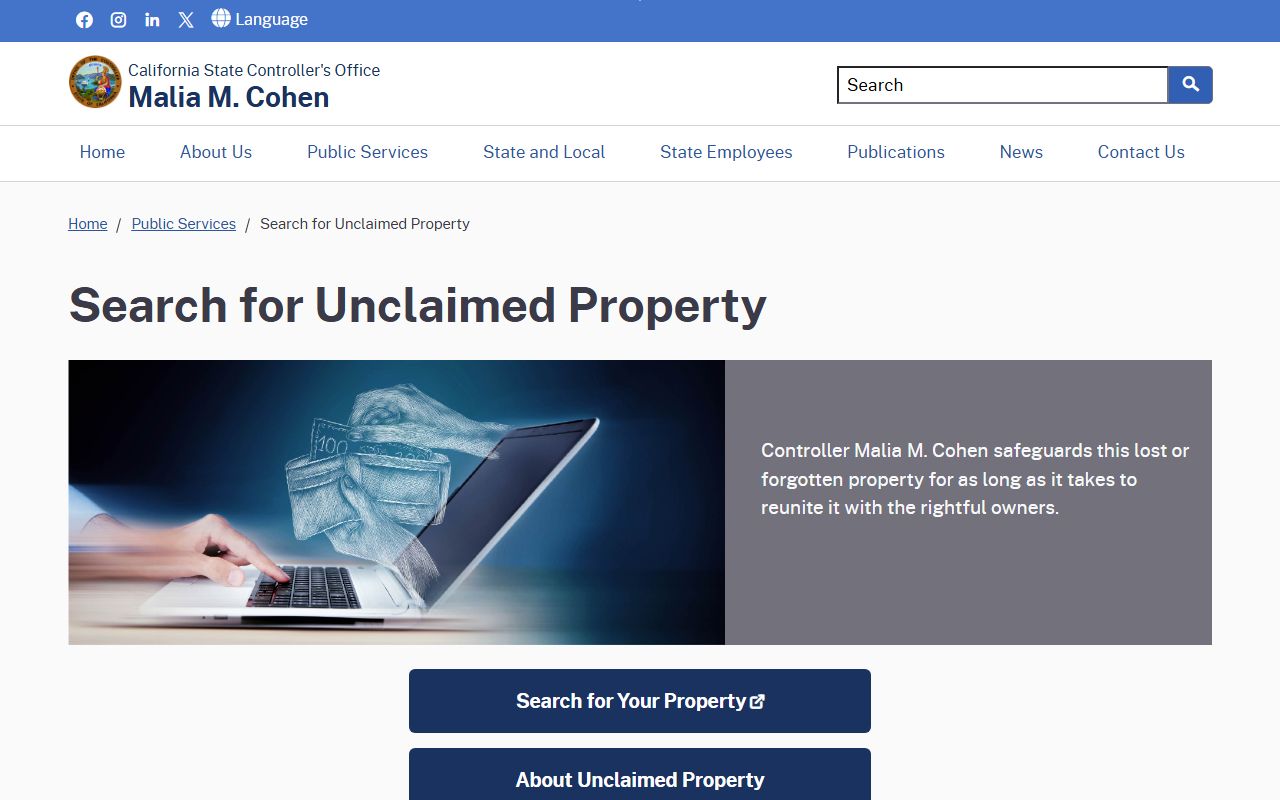
The treasurer's online database lets you search by name. Just enter your name or a deceased relative's name to see if any funds are held. The system shows the property type and approximate amount. If you find a match, contact the treasurer's office to start the claim process.
Filing Claims in Riverside County
Visit the county treasurer unclaimed money page to search the database. If you find property in your name, call 951-955-3900 for claim instructions. The treasurer's staff will explain what documents are needed for your specific claim type.
Simple claims like uncashed checks require proof of identity. Bring a driver's license or state ID that matches the name on the check. If the check was issued to a business, bring business registration documents showing you own or represent that entity.
Property tax refund claims need proof you paid the taxes or owned the property. Old tax bills, escrow statements, or property records can establish your claim. If you sold the property, the settlement statement may show tax prorations that support your right to the refund.
Estate claims are more complex. You must prove the deceased person owned the property and you have legal rights to inherit. Required documents typically include a death certificate, proof of relationship like birth certificates or marriage licenses, and possibly probate documents. California allows small estate claims with an affidavit if the total value is under certain limits set by Probate Code Section 13100.
Note: Riverside County does not charge fees to file claims for county-held unclaimed property.
California State Controller Database
In addition to county funds, Riverside County residents should search the state database. The California State Controller holds over $11 billion in unclaimed property. This includes bank accounts, paychecks, insurance policies, stock dividends, and safe deposit box contents.
Banks and private businesses report unclaimed property to the state, not the county. After three years of no owner contact, these businesses must turn funds over to the state controller. The state holds the money indefinitely with no deadline to claim.
The state search is free and takes just seconds. Enter your name to see all matching properties from throughout California. Many people have multiple items listed from different sources over the years. You might find an old bank account from a previous address, uncashed paychecks from a former employer, or insurance proceeds you never knew existed.
Filing state claims is also free. Most claims can be filed electronically through the state website. The system generates a customized claim form based on your property type. Upload copies of your ID and any supporting documents. Simple claims are often approved within 30 to 60 days.
Cities in Riverside County
Riverside County includes several large cities. Riverside is the county seat with over 330,000 residents. Moreno Valley has about 210,000 people. Corona has roughly 175,000 residents and runs its own city unclaimed funds program. Murrieta has around 116,000 people with a local unclaimed money database.
Some of these cities maintain separate unclaimed property programs for city-issued checks and refunds. If you lived in one of these cities, search the city database in addition to county and state systems. Cities handle utility refunds, business license deposits, and vendor payments. The county handles tax refunds and estates. The state handles private business property like bank accounts.
Smaller Riverside County cities include Temecula, Hemet, Palm Desert, and Indio. These cities may also hold unclaimed funds. Contact their finance departments directly to ask about local unclaimed property programs.
Other Unclaimed Money Sources
Public employees in Riverside County should check CalPERS for unclaimed pension benefits. CalPERS serves county workers, city employees, and many public agencies throughout California. If you left public employment without claiming retirement contributions, CalPERS may be holding that money. Search online or call 888-225-7377.
Teachers and school employees should search CalSTRS for unclaimed property from education employment. CalSTRS handles retirement benefits for public schools. Call 800-228-5453 with questions about unclaimed pension funds.
The California Franchise Tax Board holds unclaimed tax refunds. State income tax refund checks are valid for six months. If you never cashed your refund, you can request a replacement. Refunds one to three years old need a simple letter request. Older refunds require form 3900A or 3900B.
Unemployment and disability insurance benefits can go unclaimed. The California Employment Development Department has form DE 903SD for claiming uncashed checks. No filing fee is required. Call 800-300-5616 for unemployment or 800-480-3287 for disability insurance.
California Unclaimed Property Laws
Code of Civil Procedure Section 1500 establishes California's unclaimed property law. This statute defines abandoned property and sets rules for how long businesses must hold funds before reporting them.
Bank accounts are deemed abandoned after three years of no activity. Paychecks and wages need one year. Money orders take seven years. Traveler's checks require fifteen years. These dormancy periods begin from the date of last owner contact or account activity.
Section 1530 requires businesses to file annual reports with the state controller. The report must list all unclaimed property with owner names, addresses, and descriptions. Most businesses file by November first. Life insurance companies follow different schedules based on policy types.
Government Code sections 50050 through 50057 govern county and city unclaimed funds. These laws require local agencies to hold money for three years before it can escheat to the general fund. Riverside County uses this framework for its treasurer program.
Section 1540 requires the state controller to decide on claims within 180 days. However, complex claims may take longer if additional documentation is needed. The state does not pay interest on unclaimed property, so you only receive the original amount.
Tips for Finding Unclaimed Money
Search multiple name variations. Try maiden names, nicknames, middle names, and previous married names. Unclaimed property databases use the name on file when the account was opened, which may differ from your current legal name.
Look for deceased relatives. Many heirs have no idea family members left unclaimed property. Search for parents, grandparents, aunts, and uncles. You may be entitled to funds from estates that were never probated.
Check both county and state databases. These are separate systems with different types of property. The county holds local government funds and estates. The state holds private business property like bank accounts and paychecks. Search both to find all money that may belong to you.
Search old addresses. Sometimes the database shows a city or partial address where you used to live. This can help confirm the property belongs to you, especially if the name spelling is slightly different from what you use now.
Be cautious with heir finders. These people search databases and contact you about money in your name. They are allowed by law but charge fees up to ten percent. You can claim the same property yourself at no cost by searching directly.
Note: Never pay upfront fees to claim unclaimed property from the state controller or county treasurer.